Non-Woven Textile Air Filtration

Textile


Ducting for the textile industry: how to ensure safe and efficient production

Dust extraction systems play a vital role in the textile industry by protecting worker health, safeguarding equipment, and maintaining product quality. Textile processes such as spinning, weaving, and finishing generate large amounts of fine fibres and airborne particulate matter, which can lead to respiratory issues like asthma, bronchitis, and COPD if not properly controlled. In addition, accumulated dust can increase fire hazards and contribute to machinery malfunction and downtime, reducing overall operational efficiency.

Effective dust extraction ensures consistent airflow and cleaner air quality on the production floor, helping prevent contamination of textiles and supporting compliance with occupational safety regulations. By removing harmful dust at the source, these systems create a safer, more productive, and more reliable manufacturing environment.

Critical dust extraction points in the textile industry:

  1. Opening, blending, carding & drawing machines release large volumes of cotton, wool, and synthetic fibres, creating airborne lint and fine particulate clouds that require local exhaust extraction.
  2. Spinning & ring spinning stations create a continuous stream of lightweight flying fibres and lint, which can contaminate equipment, reduce airflow efficiency, and increase inhalation risks if not captured at the source.
  3. Weaving & knitting machines release fine fibrous dust because of the friction between the machine surfaces and yarn. These deposits increase fire risk and disrupt machine performance.
  4. Finishing, dyeing, printing & drying units These areas generate dust, dye particles, and chemical residues that become airborne during thermal or chemical processes. Without proper extraction, contamination and respiratory risks rise significantly.
  5. Packaging, baling & sewing areas stir up fibber laden air, causing spread of textile dust throughout the facility. Extraction here prevents material contamination and reduces overall dust loading.

Quick-Fit Sealed (QFS) Ducting — enhanced leak resistance

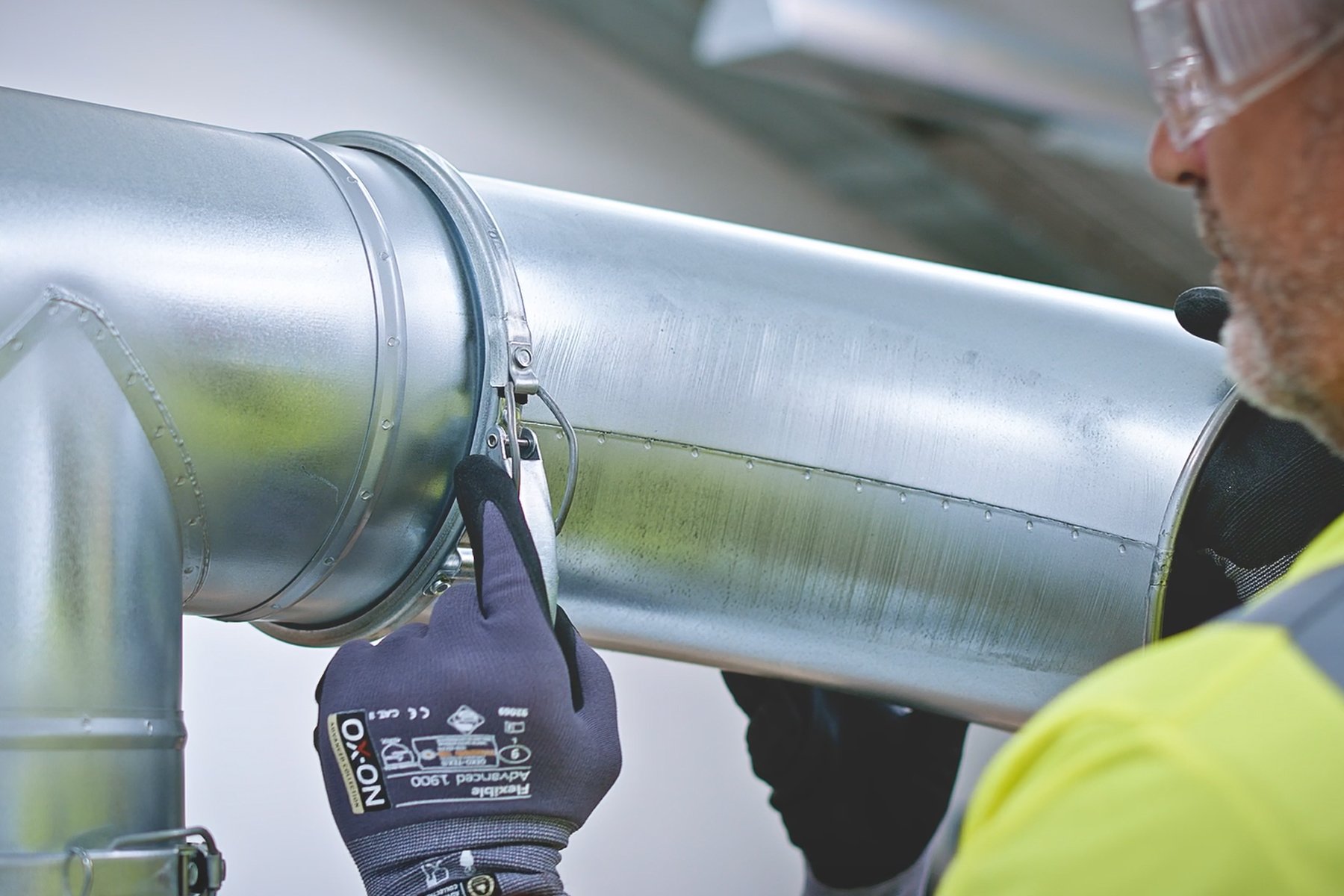
Quick-Fit Sealed (QFS) Ducting is engineered with laser-welded seams, double sealing at connections for enhanced leak resistance. All joints are epoxy caulked and when clipping the ductwork together, an additional nitrile gasket is placed between the parts to avoid leakage. Epoxy caulking and locking pins ensure a tight seal, making it ideal for oil mist and coolant mist applications in machining operations. 

Learn more about the product

Quick-Fit (QF) ducting — designed for safety

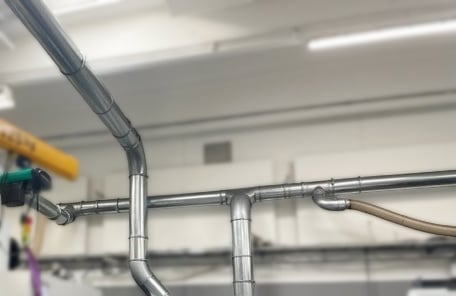
Quick-Fit (QF) ducting systems have laser-welded seams resulting in a smooth, continuous, and leak-tight interior with no crevices for dust to accumulate. This means that laser-welded ducting eliminates the risk of debris build-up and blockages,  minimises air leakage throughout the system, and enables efficient extraction of hazardous particles preventing them from circulation into the air. Combined with reduced turbulence and friction, which are often sources of static electricity, usage of laser-welded ducting decreases the risk of ignition and explosion, making the production much safer. Additionally, laser-welded ducting can meet the highest air tightness standards and reduce exposure and health risks for workers.

With components available in galvanised and stainless‑steel options, QF ducting adapts easily to different industries and environmental demands while ensuring consistent performance and compatibility across the entire system. Wide product range, extensive accessories, and true one‑stop‑shop offering give engineers, installers, and plant managers a clear advantage when choosing the ducting system

Explore the benefits

Manifolds and hoods — efficient source capture

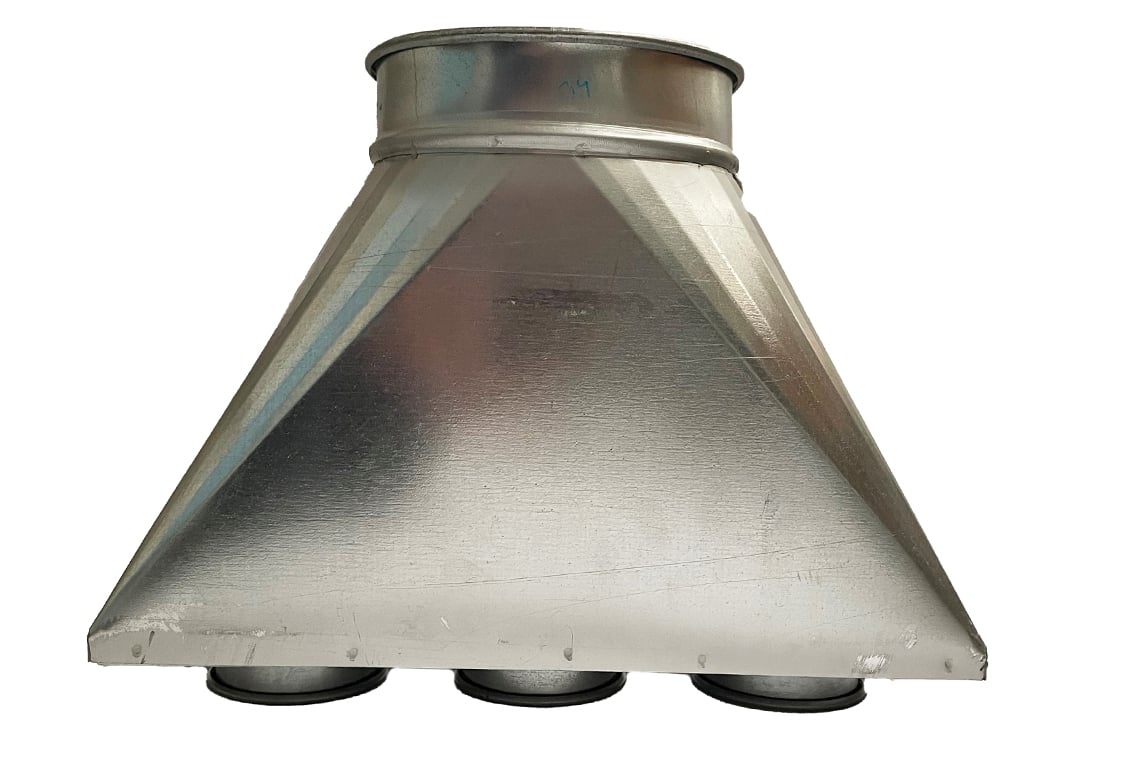
Nordfab’s manifolds and hoods play a key role in creating efficient, source‑capture ventilation across a wide range of industrial processes. Designed to sit directly above emission points, QF extraction hoods effectively pull fumes, vapours, and airborne particulates at the source, improving air quality and reducing worker exposure in environments such as textile dyeing, mixing stations, and chemical‑handling areas. Their compatibility with flexible hoses allows quick adjustment to different machine layouts, making them highly adaptable for dynamic production floors.

Manifolds and hoods also streamline multi‑point extraction by allowing several hoses or ducts to connect into a single system, supporting both localised capture and broader airflow management. Combined with Nordfab’s smooth, leak‑tight Quick‑Fit ducting, these components help prevent hazardous vapours from circulating, reduce contamination risk, and maintain safer, cleaner workspaces across industries.

Explore the product

Revit Models — accurate and BIM-ready

Nordfab Revit Models help engineers and architects work more efficiently by giving accurate, drag‑and‑drop BIM‑ready components for every part of a dust extraction system. With the full Quick‑Fit (QF) product range available in Revit, designers can build complete system layouts with confidence, avoid clashes, and reduce design errors thanks to precise geometries and connection details. These models integrate seamlessly into BIM workflows, enabling faster planning, clearer coordination across trades, and smoother project execution from concept to installation. This means you can easily integrate our Quick-Fit ducting systems into your BIM workflows, ensuring accurate specifications and reducing the risk of costly design errors.

Read more about our Revit Models

Move from guesswork to confidence — download our complete Quick‑Fit Revit library and design your extraction system with proven, clash‑free, BIM‑accurate components.

Download models

Contact Nordfab

Do you have a process ventilation challenge? Relax, we're here to help. Get in touch with our Nordfabulous team to discuss your needs and find the right ducting solution for your application.
Contact Us