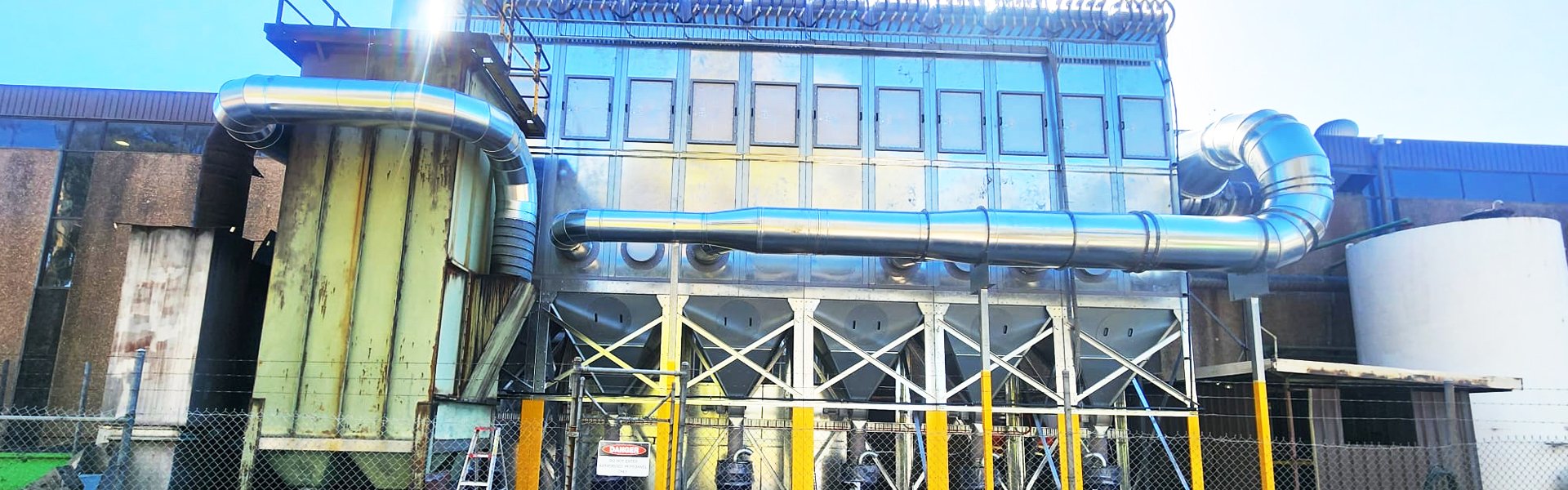
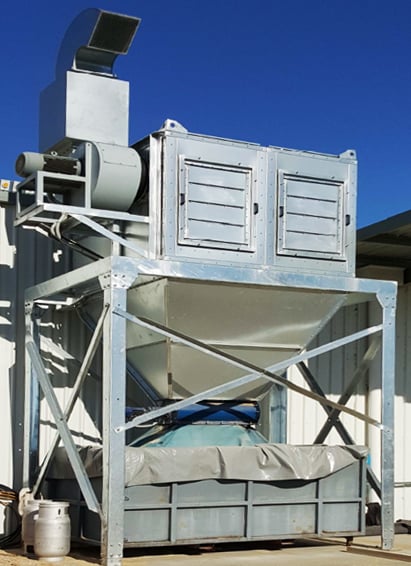
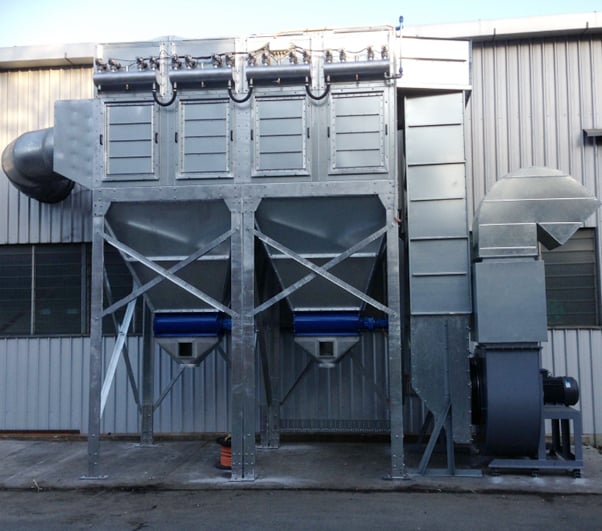
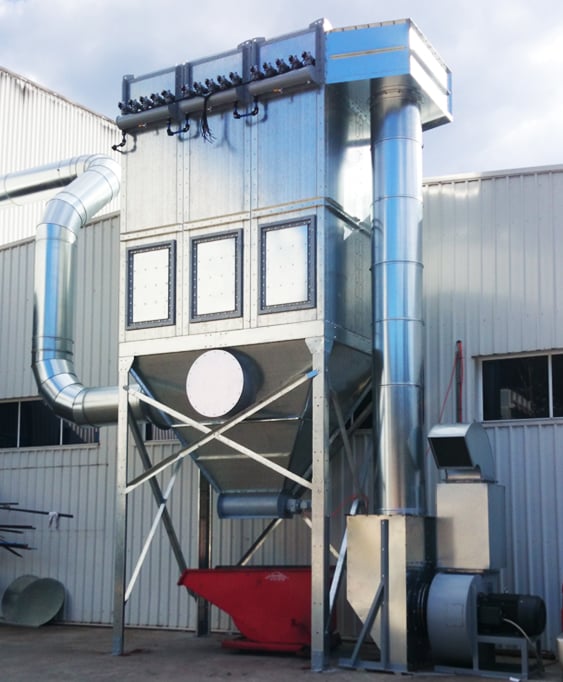
Modular Filtration System & Operating Principle
The MDC range uses a modular negative-pressure filtration architecture, designed to maintain consistent airflow and high dust capture efficiency across varying industrial loads. Filtration media options include high-efficiency filter bags or cartridge systems, selected based on application requirements.
Filter Cleaning Technologies
- Shaker (Vibration) Cleaning System (MDC-S)
Mechanical oscillation dislodges dust from filter media during shutdown cycles, restoring airflow performance and extending filter life.
- Compressed Air Pulse Jet System (MDC-P / MDC-PC)
High-pressure air pulses clean filters during operation, ensuring continuous filtration and stable differential pressure control.
These systems reduce filter blinding, optimise airflow efficiency, and significantly extend service life.
Energy Efficiency & Smart System Control
All MDC systems integrate PLC-based automated control systems, enabling intelligent management of filtration performance, including:
- Differential pressure monitoring
- Automated cleaning cycle control
- Timer or demand-based operation logic
Optional Variable Speed Drive (VSD) integration allows real-time airflow adjustment based on system demand, reducing energy consumption during low-load or idle conditions while maintaining required capture velocities.
Continuous Operation & Material Handling
The MDC system incorporates a rotary airlock discharge system, enabling continuous dust removal into bins or screw conveyors without interrupting operation.
This ensures:
- Continuous production flow
- No system shutdown during waste discharge
- Stable extraction performance under heavy loading
Model Variants
- MDC-S – Shaker-cleaned bag filtration system (batch cleaning during shutdown)
- MDC-P – Pulse jet bag filtration system (continuous online cleaning)
- MDC-PC – Pulse jet cartridge filtration system (high-efficiency fine particulate capture)
Performance Range
- Airflow capacity: 4,000 m³/h to 250,000 m³/h
- Scalable from single-machine extraction to large multi-zone industrial ventilation systems
- Suitable for both point-source and centralised dust collection networks
Construction & Engineering Design Features
- Heavy-duty galvanised steel modular construction for corrosion resistance and durability
- High-efficiency centrifugal fan systems optimised for static pressure and reduced energy consumption
- Negative pressure containment design to prevent fugitive dust leakage
- Modular expansion capability for future system scaling without full replacement
Optional Engineering Configurations
- Stainless steel construction for corrosive, hygienic, or pharmaceutical environments
- Protective industrial coatings for harsh or outdoor applications
- Compliant explosion protection for combustible dust applications (e.g. grain, biomass, fine organic dust)
Industry Sectors most suitable for MDC Dust Collectors
The Nordfab MDC Dust Collector Range is widely used across:
- Woodworking and timber manufacturing
- Metal fabrication, welding, grinding, and machining
- Recycling and resource recovery (plastics, e-waste, mixed materials)
- Pharmaceutical and chemical processing (application-dependent filtration)
- Food and agricultural processing (grain, flour, sugar, bulk solids)
- Foundries and heavy industrial manufacturing
- Composite materials and fibreglass production
Applications where MDC Dust Collectors are used
- Industrial dust extraction systems
- Process air filtration and ventilation
- Centralised dust collection networks
- Machine extraction and production line capture
- High-volume particulate control systems
- Continuous manufacturing air quality management
Engineering Support, Australia-Wide
Nordfab MDC systems are designed and supported by Australian engineering teams, with technical support across Sydney, Melbourne, and Brisbane. This ensures:
- Local compliance understanding
- Fast engineering response times
- Application-specific system design support
- Integration guidance for complex industrial environment
Supply only basis: Freight, installation, electrical integration, and commissioning are excluded unless otherwise specified?